



Call me Simon
By Haley Stewart, 17
Monthly Story Challenge Winner
Click the "Clap" button if you liked this story!
People do not like to talk to me. I have been told that I am not normal. That the things I say and think are repulsive, and it pushes people away. Even though that is a fact, I try not to think of it. I do my best to pretend that it doesn’t bother me and focus on more important things.
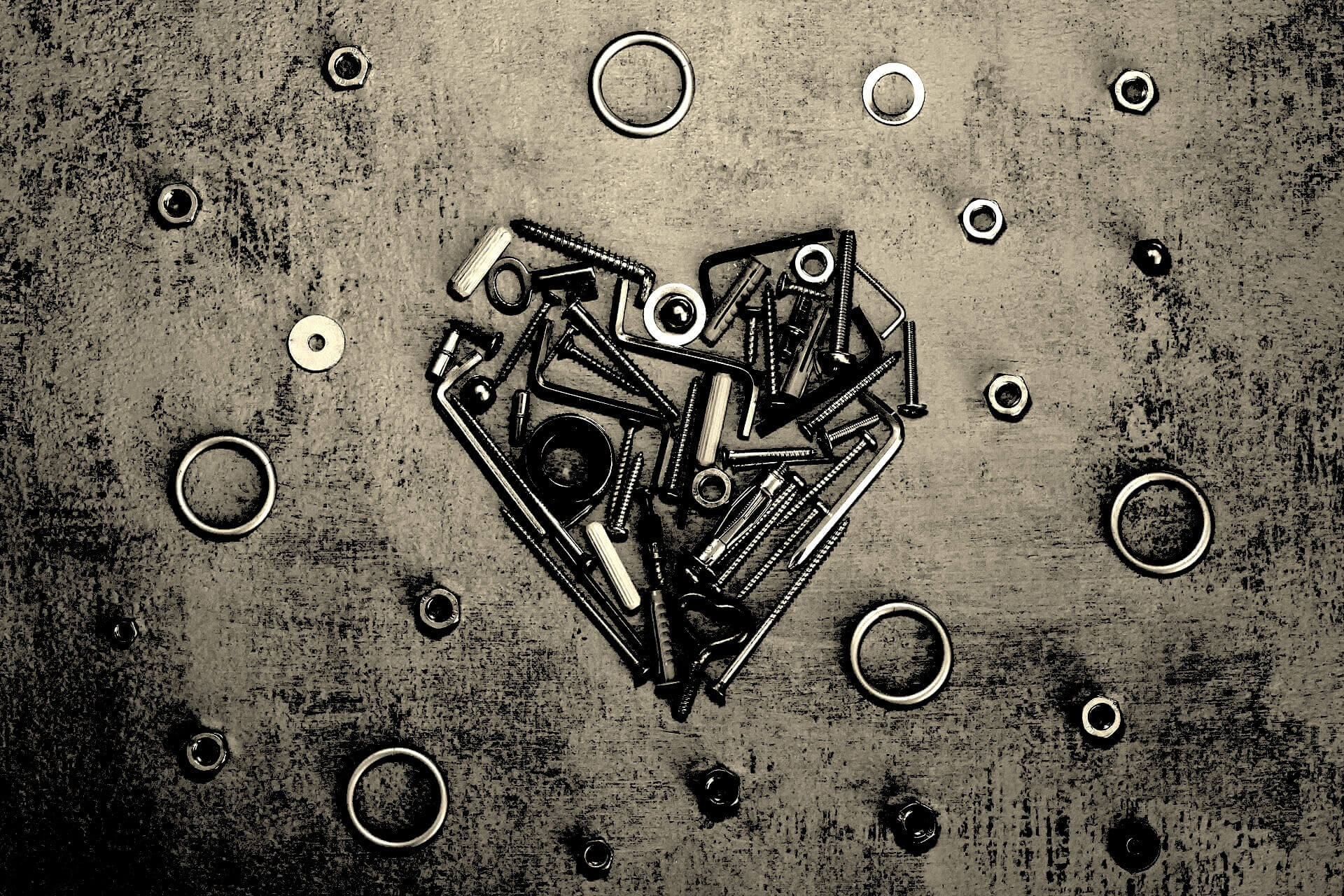
Scattered on my wilted desk are metal parts. Parts that will be a companion. Maybe if I build something with my hands, it will like me. It will see my dedication and feel sorry enough to want to talk to me.
Next to the metal parts lies a white foam box. Inside, something still beats with life. Who it used to belong to is no longer relevant.
With pliers in my hands, I twist the wires, coiling them around the joint. An arm is what I have made, along with another. I decided not to give my companion legs. If I do, it will leave. It will walk right out the door into the cold rain. Its joints will rust, and it will get stuck. It will be my fault because I gave it the means to do so.
I don’t want to be alone again. So, it will not have legs.
The shell of the face is constructed, as well as the neck. The body is formed, mostly hollow—a place for the conductor of energy—for life. A voice box settles at the base of the metal skull. Lenses are rounded to mimic eyes so it will be able to see me. I think if it has a visual, it will like me better. It will make it feel useful to see the loneliness it’s fixing.
“Oil,” I tell the shell of my friend. It’s fully constructed, only missing life. “It’s for your joints. So they move smoothly.” I move closer to my desk, sitting down in my chair. “Tomorrow, you will talk. Tomorrow I will give you life as well as a heart.” Carefully, as I can manage, I move the white foam box closer. I hold it up, showing my companion, though it cannot see or hear. “This is your heart.”
“Can you see me?” I ask my metal companion.
It moves its arms and wiggles its fingers. Its eyes move around the solitary space we now share. “Yes, I can see you.” Its voice is jagged and robotic. Chills erupt across my skin at the sound. It's unnerving.
“How many fingers am I holding up?”
A pause. “Three.”
“Yes. Good.”
Its machine hands start to feel its body. Its stand. Its heart.
“Don’t do that. Don’t touch your heart, you might damage it.”
A clear box is placed around its heart. A shield around its life. Its heart beats, not with blood, but with pulses of electricity. Wires go in and out of the vessels and arteries, conducting life. The heart is stark white, practically see-through. I do not look at it and pretend that it belongs to my metal companion.
“What is it to be human?” That’s the only question it’s asked me. Perhaps it is because it has a human heart, it feels almost human, the smallest amount of human.
“That’s a good question.”
Its slender face looks at me, pointed chin turned upward. “Is it?”
“Very much.” I turn the stove off. “I don’t know.”
“You are human?”
“Yes, I am. But I don’t know what makes me a human. Perhaps my genes and genetics, the fact that I have skin and bones, but I don’t think that's what it is to be human.” I pour my pasta into a clean bowl and sit at my desk. “I suppose to be human is to love,” I settle on. Its eyes move to my bowl. “Love food?”
“Yes, I love food,” I laugh. “But, I meant people. To love another person.” “Do you love a person?”
“I do. I love him a great deal. Too much, I think.”
The conversation is over, but not to my companion. It stares at me with glowing eyes. Tell me more, is what I think it is trying to say.
I place my bowl down. My companion leans in. “His words are kind—that is what I love most about him. He pieces letters together so softly and gently and forms the kindest of words. Like soft rain, and the petals of flowers.”
“Is he going to see you soon?” Its voice changes slightly to a higher pitch. Hope is what it is.
“No. He is dead.”
My hands move steadily across the acrylic shape. I have tired my eyes with the hollow shell of my companion. I am giving it small plates to cover its metal, making it whole. “Why green?” it asks.
I stop. Look up. “You said you wanted green.”
“No.”
“Yes, you did.”
“I want blue.”
“You will get green.”
“Who did you love?”
“I loved a boy.”
“Why is he dead?”
Its question stalls my movements. It makes me think. I look at its beating heart and try to find the rhythm. “You have to stop moving,” I say. “If you move again, your face will be crooked.”
“Do I have a name?”
I lean back in my chair, stopping what I am doing. “No. Would you like one?” “Yes, very much so.”
“Okay. What do you think it should be?”
Its hands come up to the clear case around its heart. “Whose heart do I have?” “I’ve told you.”
“You have not.”
“Well, I’ve told you about him,” I say. “His words are kind, like soft rain and the petals of flowers. He loves green, and you wear it with honor. And he died because he did not understand that I loved him.”
“Simon?”
“Yes,” I say quietly. “You have Simon's heart.”
Its eyes move to my face. The small robotic hands drift around the clear box. A moment of silence passes.
“Then call me Simon.”
Click the "Clap" button if you liked this story!
Photo: Michaela St. on Unsplash