



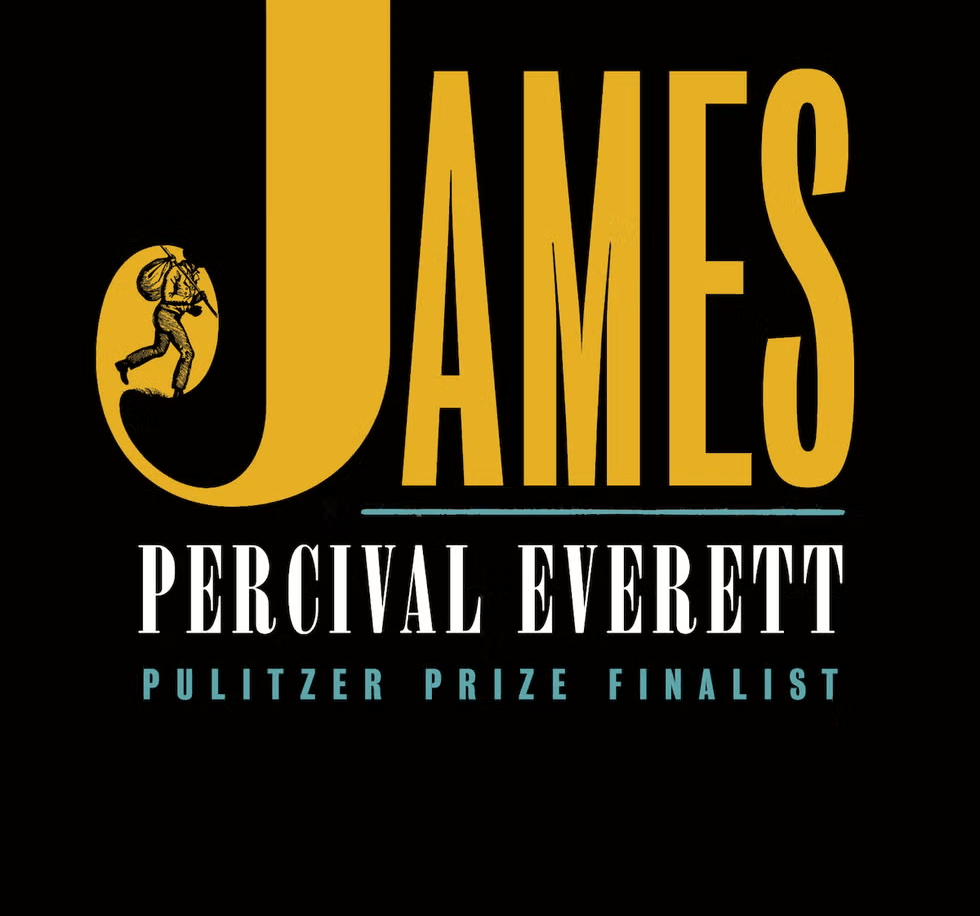
The Theme of Oppression and Control through Racism, Violence, and Manipulation
By Nolan C.
A Monthly Story Challenge Winner
If you liked this essay, click the "Clap" button at the end.
Imagine living in a world where an individual's freedom, family, and identity can be taken away at any moment simply because of the color of a person’s skin. It is the mid-1800s; slavery is widespread throughout parts of the Midwest and the entire South of the United States. The economies of these areas rely on forced Black labor, pushing the slaveholders to control the humans they see as property through any means they can. James, often referred to as Jim, is an enslaved man who escapes from his owner and meets Huck, a young White boy fleeing from his abusive father. In the novels Adventures of Huckleberry Finn by Mark Twain and James by Percival Everett, the authors portray similarities in the overarching theme of oppression through racism and laws, physical abuse, and emotional and psychological manipulation.
Both historical fiction novels demonstrate how Jim’s life as a Black slave is controlled by racism and laws, although each book portrays the following scene differently. In this quote from James, Jim describes being treated as material that can be bought and sold whenever his owner wants. James tells Huck that Miss Watson is planning to sell him, and he needs to escape:
“I be a slave, Huck. She kin sell me if she want. And ‘parently, she want. I had to run fo’ she done it.”
“But you got a family.”
“Don’ mean nuffin if’n you a slave.” (Everett 37-38)
Huck feels guilty that Jim is separated from his family and is beginning to question why Jim is treated differently from others. Family does not mean anything when people are slaves because they or their family can be sold at any time. Jim has no control over his life or the things he cares about. Slavery turns relationships into something that can be broken for money or ownership. Legal and racial systems remove personal freedom.
In the same scene from Adventures of Huckleberry Finn, Jim’s description of being sold is quite similar. Jim explains, “... she didn’ want to, but she could git eight hund’d dollars for me, en it ‘uz sich a big stack o’ money she couldn’ resis’” (Twain 43). Jim is treated as a possession that can be transferred, similar to a mule from owner to owner. His value is based on economic gain rather than his humanity. While it seems Miss Watson does not want to sell Jim because he is an excellent worker, she ultimately chooses money over morality.
Within each novel, control is established through physical force in order to maintain power and dampen thoughts of escaping. Right after James is bought by Henderson, a particularly violent slave owner, he whips Jim, a ritual he performs to “break in” slaves. James describes the traumatic event: “I said nothing as the leather stung me, ripped me, burned me. Before I passed out, I was surprised by the realization that my flowing blood did not at all cool the burning of the wounds” (Everett 209). Since Henderson orders another slave to tie Jim to a post beforehand, James cannot defend himself. He says nothing and stays silent, eventually passing out from the pain. As a slave, Jim understands that if he talks back, it will anger Henderson and make the beating much worse. This quiet submission shows the slave owner that violence does assert dominance, yet Jim’s motivation for remaining silent is self-preservation rather than a true surrender of his will.
In Huckleberry Finn, oppression is seen not between master and slave, but surprisingly between a White father and son. Huck tells about his experience: “But by and by pap got too handy with his hick’ry, and I couldn’t stand it. I was all over welts. He got to going away so much, too, and locking me in. Once he locked me in and was gone three days. It was dreadful lonesome” (Twain 25). Instead of using words to express what he wants, Pap beats Huck with a stick and traps him inside the cabin, which appears to happen often. Pap resorts to violence and isolation to establish power over Huck. Locking in his son represents control over his freedom and movement. Huck's loneliness displays how physical and psychological abuse can break someone entirely.
This emotional manipulation is embedded in the institution of slavery, which forces a racial hierarchy to form. During a hallucination, Jim discusses his circumstances with John Locke, the philosopher. Locke states: “Imagine it all as a state of war. You have been conquered, and so as long as the war continues, you shall be a slave” (Everett 263). In Jim’s dream, John Locke compares slavery to war, explaining it as a form of conquest and control. The discussion continues with Locke telling Jim, “A war continues until the victor says it’s over” (Everett 263). Naturally, Jim asserts that he has the right to defend himself against an enemy. John responds condescendingly: “Well, now” (Everett 263). He then repeats the phrase, showing that he is in the “victor” group and that slavery will not end any time soon. The quote suggests that freedom is controlled entirely by the oppressors and not the oppressed. The “victors” decide when the war ends and slavery and suffering end. The fact that this hallucination is happening in Jim’s mind illustrates that the psychological manipulation is deep enough that he is being convinced he needs to accept his fate as a slave by his own thinking.
The same societal beliefs are passed down to children as well, including Huck. He initially sees Jim as an object to own, even like a toy to manipulate. In Adventures of Huckleberry Finn, Huck describes one of his pranks: “I went to the cavern… and found a rattlesnake in there. I killed him and curled him up on the foot of Jim’s blanket, ever so natural, thinking there’d be some fun when Jim found him there” (Twain 51). Huck believes frightening Jim is funny and manipulates his fear for entertainment. Planting a dead snake on Jim’s blanket portrays Huck as unconcerned for Jim’s well-being as he scares him for amusement. Huck’s poor judgment and carelessness actually lead to Jim being bitten by another live snake later. Huck's behavior, which he is learning from adults, perpetuates slavery another generation as a child treats a Black adult as someone beneath him.
In summary, in Adventures of Huckleberry Finn by Mark Twain and James by Percival Everett, dominance is established through utilizing legalized racism, physical abuse, and psychological manipulation. Of course, since the mid 1800s, America has abolished slavery, yet quieter forms of oppression are still present in modern society. By exploring two personal perspectives, from a Black man and a White boy, readers can better understand how racism affects people emotionally and socially. This awareness can improve the demeaning behavior that African-American people still unjustly experience. Not only do these books portray the physical cruelty of oppression, but they also reveal how racism can psychologically shape the way people see themselves and others. The effects of racism remain visible in the present day. This can be seen in the fact that black men are imprisoned at a rate 5.5 times that of white men (The Sentencing Project), and only four percent of CEO’s are Black (Wakeman). In the United States, only 7% of college professors are African American (National Center for Education Statistics). While slavery no longer exists in the United States, the persistence of racial inequality shows that society must continue working for justice and equality for all.
Works Cited
Everett, Percival. James. Doubleday, 2024.
National Center for Education Statistics. “Characteristics of Postsecondary Faculty.” Condition of Education, U.S. Department of Education, Institute of Education Sciences, 2024. Accessed 2 June 2026.
The Sentencing Project. One in Five: Ending Racial Inequity in Incarceration. 2023, www.sentencingproject.org/reports/one-in-five-ending-racial-inequity-in-incarceration/. Accessed 2 June 2026.
Twain, Mark. Adventures of Huckleberry Finn. Sirius, 1884.
Wakeman, Nick. “Pockets of Progress: Diversity Gains Slow among the 2025 Top 100.” Washington Technology, 11 June 2025. Accessed 2 June 2026.
Click the "Clap" button if you liked this essay!